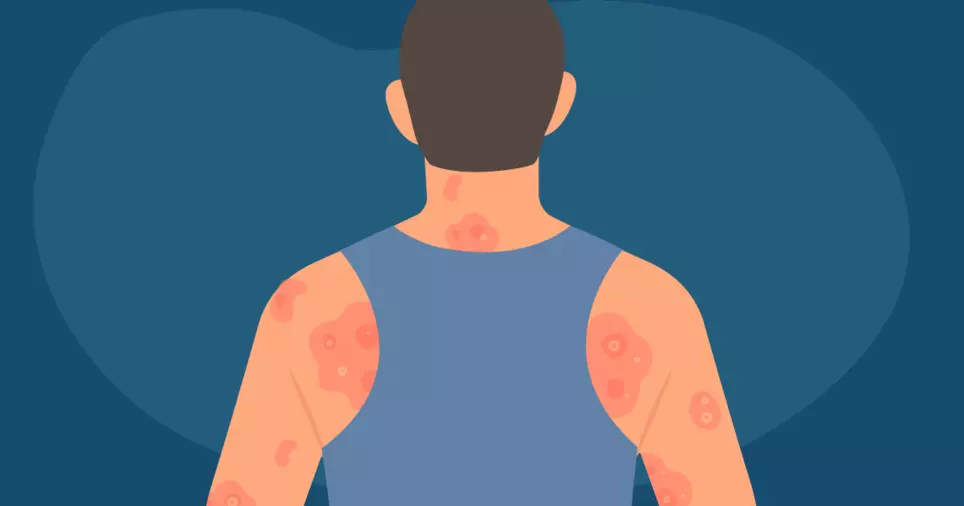
Psoriasis is an autoimmune condition where the immune system mistakenly attacks healthy skin cells. This causes skin to produce new cells much faster than it can shed them, leading to the buildup of thick, scaly patches known as plaques.
Specialized immune cells called T cells, which normally fight off bacteria and Show Full Answer
Psoriasis is an autoimmune condition where the immune system mistakenly attacks healthy skin cells. This causes skin to produce new cells much faster than it can shed them, leading to the buildup of thick, scaly patches known as plaques.
Specialized immune cells called T cells, which normally fight off bacteria and viruses, end up attacking the skin instead. The body then releases proteins that cause inflammation — redness, swelling, and pain — in the affected areas. Researchers believe both genetics and environmental factors play a role. Some key risk factors include:
- Family history — If one parent has psoriasis, there's a 28% chance their child will develop it. That rises to 65% if both parents have it
- Stress — A very common trigger for flare-ups
- Skin injuries — Cuts, scrapes, or sunburn can set off a flare
- Infections — Strep throat in particular is a well-known trigger
- Smoking — Strongly linked to psoriasis development and worsening symptoms
- Alcohol — Heavy drinking can trigger or worsen flares
- Certain medications — Including some corticosteroids and antidepressants
- Cold or dry weather — Can aggravate symptoms
It's worth noting that psoriasis is not contagious — you cannot catch it from another person, even during a flare-up.
May 24







 Join
Join






 Your Privacy Choices