
Powered By


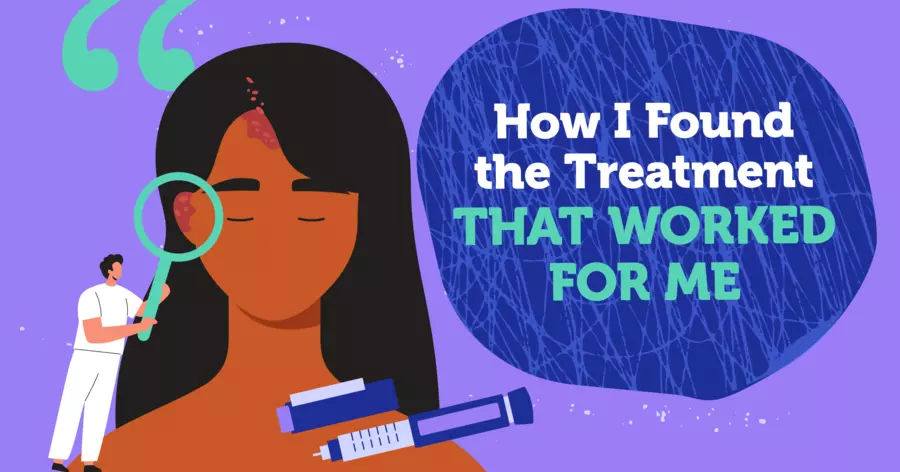
Takieyah Mathis, like so many others with psoriasis, tried a variety of treatments before she found what works for her. Her experience shows the importance of never giving up. As Takieyah watched her psoriasis symptoms move from her scalp to her face, ears, and back, she didn’t settle until she gained relief.

Takieyah is a chronic illness advocate, a social work student, an author, a wife, and a mother. She uses her experience with psoriasis to mentor and inspire others. Here is her story.
How I Found the Psoriasis Treatment That Worked for Me
00:00:00:00 - 00:00:12:10
Takieyah Mathis
My first experience with it, when it was head to toe, I felt like that was the worst that psoriasis could get; until two or three years later, and I was like, “Oh no. This is the worst that psoriasis can get.”
00:00:12:12 - 00:00:36:03
Takieyah Mathis
I started my psoriasis journey in high school because I would notice I had these patches on my scalp. From 16 to about 24 years old. I didn't notice like how bad my psoriasis was getting. My hair is falling out, my eyebrows, eyelashes, everything were flaky, my back was covered. It was just really, really bad, and I felt like I should be hiding myself.
00:00:36:03 - 00:00:57:16
Takieyah Mathis
It felt really, really terrible to be out in public. I saw the doctor finally, and of course, the first thing that I got was prescribed and suggested was creams. Creams worked for a little while. It cleared up the basis of what I had going on, but I started having symptoms in other ways that I realized okay, the cream can't reach or it’s not doing enough.
00:00:57:17 - 00:01:18:14
Takieyah Mathis
So my doctor tried an oil. That works a little. And then my doctor saw my scalp. One day she said, “I know you're trying this stuff, but okay, we need to get you a shampoo.” A little cream wasn't just going to heal my scalp. So it went from cream, a couple different oils, shampoo to, okay, now I really can't hear.
00:01:18:14 - 00:01:33:16
Takieyah Mathis
My ear gets really inflamed with psoriasis to the point where I cannot hear anything. And so when I told my doctor what I was going through and she saw how my ear looked, she said, “We're going to have to put you on an oral treatment to clear this up a little bit.” And so, we tried the oral first for some months.
00:01:33:18 - 00:01:51:08
Takieyah Mathis
We noticed that just with the oral that it wasn't doing what it needed to. She wanted me to be on an injectable biologic. The injectable, it kind of even things out. I noticed a huge change, a lot of improvement for my skin. I’d look at my neck every morning and I'm like, “Wow, my neck is really clear.” I cannot believe it.
00:01:51:08 - 00:02:15:16
Takieyah Mathis
And I look back through my pictures very often and I'm like, “This is incredible that there's really medicines out here.” It is very empowering because I look and I feel better every single day. Now that I'm more informed of different methods or treatments, I feel like I could have done more research before I started. Do research, figure out what works for you, but also don't be afraid to say, “Hey, this is not working.”
00:02:15:17 - 00:02:36:01
Takieyah Mathis
Be patient and love yourself through the process. I can really look back , like wow, my head looked terrible, and I cannot believe that I even went through something like that. My name is Takieyah, and I live with psoriasis. Learn more and connect at MyPsoriasisTeam.com.
 Early Symptoms
 Takieyah’s psoriasis symptoms first appeared when she was about 16. “I started my psoriasis journey in high school,” she said. “I would notice I had these patches on my scalp.” Her condition progressed gradually over the next few years, and she didn’t realize how severe it was becoming until symptoms began to affect her whole body. View an interactive graphic to see how psoriasis can appear in different areas of the body on various skin types.
“My hair was falling out. My eyebrows, eyelashes, everything was flaky — my back was covered. It was just really, really bad, and I felt like I should be hiding myself,” Takieyah said. “It felt really, really terrible to be out in public.”
 Treatment With Topicals
In the early days of Takieyah’s treatment journey, her doctor prescribed topical creams that she applied directly to her skin. These therapies worked at first, but eventually their impact began to fade. After that, she tried a topical oil and later a shampoo to address her scalp psoriasis. For some people with psoriasis, topicals are enough to control symptoms, but that wasn’t the case for Takieyah.1
As she focused on improving her skin, Takieyah developed an unexpected symptom that drastically affected her quality of life — she had trouble hearing. “My ear got really inflamed with psoriasis to the point where I cannot hear anything,” she said.
Sudden hearing loss isn’t common in people with psoriasis, but it can happen. Researchers believe that the link between psoriasis and hearing issues may be related to inflammation and immune system malfunction.2
When psoriasis isn’t controlled, hearing loss and other complications may develop. For instance, about 30 percent of people with psoriasis also have psoriatic arthritis, which causes stiff, painful, swollen joints, as well as changes to the skin, fingernails, and toenails.3 In addition to her hearing issues, Takieyah also developed psoriatic arthritis.
Like psoriasis, psoriatic arthritis is an inflammatory condition that can be treated with systemic treatments.3 There’s evidence that suggests that people with psoriasis who are adequately treated with biologics may have a lower rate of developing psoriatic arthritis, but more studies are needed.4-6
 Moving Toward Systemic Treatments
If topical treatments don’t control your psoriasis symptoms, your dermatologist may prescribe systemic treatments. These medications may be given as an injection or a pill. Biologics, a type of systemic treatment, work by calming your immune system and reducing inflammation.1 For Takieyah, systemic treatments were the next step in her treatment lineup.
“When I told my doctor what I was going through, she saw how my ear looked and said, ‘We’re going to put you on an oral treatment,’” Takieyah recalled. When that didn’t help as much as they’d hoped, the doctor suggested an injectable biologic medication. Takieyah experienced significant relief after starting a biologic.

“Don’t be afraid to say, ‘Hey, this is not working.’ Be patient, and love yourself through the process.”
— Takieyah Mathis
“I noticed a huge change,” Takieyah said, describing her experience with biologic treatment. “I cannot believe it some days. It’s very empowering because I look and I feel better every single day.”
Takieyah advises others with psoriasis to research treatment options and work with their dermatology team or other healthcare provider to find effective treatments: “Don’t be afraid to say, ‘Hey, this is not working.’ Be patient, and love yourself through the process.”
Take control of your skin and your health. Hear Takieyah’s tips for talking with your doctor about your psoriasis treatment.
Get updates directly to your inbox.





 Continue with Facebook
Continue with Email
Continue with Facebook
Continue with Email
Continue with Facebook
Continue with Email
Continue with Facebook
Continue with Email
Become a member to get even more





 Join
Join



 Your Privacy Choices

This is a member-feature!
Sign up for free to view article comments.
I think what most of us psoriasis sufferers don't realize is just how individualized a treatment plan has to be -- not that it starts out that way. Initially, the dermatologist just wanted to 'push'… read more
We'd love to hear from you! Please share your name and email to post and read comments.
You'll also get the latest articles directly to your inbox.