
Powered By



 Continue with Facebook
Continue with Email
Continue with Facebook
Continue with Email
“I never thought I’d lose my hair from psoriatic disease!” one MyPsoriasisTeam member shared. Hair loss can be a challenging and often surprising symptom of psoriasis or psoriatic arthritis (PsA).
Here’s what you need to know if you’re living with psoriasis or PsA and hair loss (also called alopecia). Like other psoriasis symptoms, new or worsening hair loss is a reason to talk with your dermatologist. They can help figure out what’s causing it and what may help.
Sign up to view the results!
Continue with Facebook
Continue with Email
Several MyPsoriasisTeam members have experienced hair loss, particularly from scalp psoriasis. “My hair was progressively thinning out,” wrote one member, “and then it started falling out in clumps at the plaque psoriasis places on my scalp.” The hair loss can come on quickly: “All of a sudden, I’m losing massive amounts of hair,” said another member.

Sometimes, people lose hair only when they tug on it with a brush or comb. “My hair was falling out ‘big time’ every time I combed it,” shared one member. “I always had thick hair, but there was so much hair loss that on the back of my head, you could see a large area of my scalp.”
People sometimes lose a significant amount of hair, which can lead to difficult choices. “My hair is falling out like crazy. I might shave my head due to scalp psoriasis,” one member shared. Another wrote, “The thickness of my hair is down by 50 percent.”

Here are six facts to know if you’re also losing hair because of psoriasis.
Most of the time, hair loss happens when a person already has psoriasis plaques or lesions. Although some have more widespread hair loss, the majority of people with psoriasis experience only temporary hair loss, and their hair will regrow once the condition is under control.
Hair loss typically shows up as part of psoriasis flares and goes away when the flare-ups pass. One small study found that about half of the participants with psoriasis experiencing hair loss had acute (short-term) hair loss. Others had chronic (long-term) hair loss, which happened regardless of psoriasis flares.
Can psoriasis cause baldness? Psoriasis on the scalp can lead to scarring, so caring for your scalp safely is important. In rare cases, hair may not grow back in areas with scarring.
People with PsA can also experience hair loss if they have scalp symptoms. In fact, having scalp psoriasis may raise the risk of PsA.
Psoriasis or PsA can lead to hair loss for a few reasons. It may happen because of scalp plaques, scratching that damages the skin, or side effects from psoriasis treatments.
Psoriasis is a condition that causes the immune system to overreact, leading to inflammation. Scalp psoriasis can affect both skin cells and hair follicles. The condition can cause follicles to weaken, making hair brittle. The hair may not necessarily fall out, but it usually breaks more easily than healthy hair does. Simply brushing brittle hair or pulling it back into a tight hairstyle may cause breakage. Constant itching and scratching can damage already delicate hair, increasing the chances of hair loss.
The inflammation from psoriasis causes plaques to build up on the skin. If you don’t remove these scales carefully, they can break off hair in the affected area.
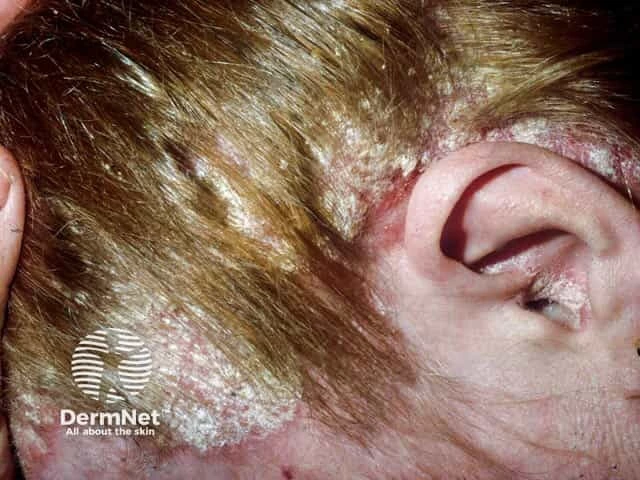
Psoriasis plaques are often itchy. This itchiness can come with dry skin and flaking, which can make the problem worse. Many people with psoriasis find themselves scratching their scalp even if they don’t mean to. Scratching can damage fragile hair and make it fall out more.
For some people, stress can trigger plaque psoriasis or PsA symptoms. Because hair loss can cause stress, people can find themselves in a negative cycle — stress can worsen symptoms, which can lead to hair loss, which can cause more stress, and so on. Finding healthy ways to manage stress that’s related to psoriasis or PsA could be key to minimizing or preventing hair loss. Research shows that relaxation and cognitive behavioral therapy (a goal-oriented type of talk therapy) can help people who experience stress and psoriasis.
Some psoriasis medications can cause hair loss as a side effect. Methotrexate and retinoids are two treatments that can cause hair loss.
If you start losing your hair after taking a new medication, talk to your rheumatologist or dermatologist about the drug’s side effects. With your doctor’s guidance, you may choose to try a different medication. Don’t stop taking your medication without first talking to your doctor.
You can include specific steps in your treatment plan to prevent or reduce hair loss associated with psoriasis, PsA, or scalp psoriasis. The goal is to calm the inflammation, loosen scales gently, and avoid scratching or irritation. The tips below can help protect your scalp and hair while your skin heals.
Talk to your dermatology team about getting a medicated shampoo or other topical scalp treatment (like a steroid cream or lotion) for the affected area or your whole head. These products can help get your psoriasis under control, which may help stop or minimize hair loss. Shampoos for scalp psoriasis can have a variety of effective ingredients, including coal tar, salicylic acid, and corticosteroids.
Don’t pick at plaques on your scalp. Instead, use a shampoo with ingredients that help soften scales. Use the shampoo as directed, and then see if you can gently peel any scaly patches off your scalp. You may need to let the shampoo soak in or use it several times before you can remove the plaques without taking hair along with it. Scrubbing or picking too hard can make psoriasis worse and damage your hair, leading to hair loss.
Scale-softening products contain salicylic acid, urea, or lactic acid to help remove thick plaques. When you use these products, carefully follow the instructions. Using too much salicylic acid can cause skin irritation and hair loss.
Keep your nails short to avoid accidentally damaging your hair or scalp when you apply shampoo or a topical treatment. Short nails are also less likely to cause harm if you happen to scratch your scalp while awake or asleep. When applying shampoos or a topical treatment, use your fingertips to gently rub it in.
Using a moisturizing conditioner can prevent dry scalp, reduce itching, and help minimize hair loss. Test your conditioner, along with all your hair care products, to make sure it’s not adding to your scalp difficulties. Apply a small amount to your scalp and wait a few hours. If you notice irritation or itching, swap that product for something more gentle.
Let your hair air-dry, and don’t use a curling iron, a flat iron, or other heated styling tools while managing scalp psoriasis. Heat can dry out your hair and irritate your scalp, slowing down healing. Minimizing heat exposure will help your scalp heal faster and may reduce hair loss.
Psoriasis and other skin conditions may lead to both physical and emotional challenges. Addressing hair loss early can help you manage the symptom and reduce its impact on your well-being. If you’re noticing hair loss related to psoriatic disease, talk to your healthcare provider. They can come up with a personalized treatment plan, which may include specific scalp products and medications. If your hair loss doesn’t improve, let your doctor know. Some other factor, such as a side effect of a medication, might be causing your hair loss.
When you talk to your doctor, be open about how hair loss from psoriasis affects you emotionally, socially, and professionally. Feeling self-conscious about your appearance can have an impact on your self-esteem, relationships, and daily life. Tell your healthcare provider if you’re feeling isolated, anxious, or stressed about your hair loss. Sharing these details can help them support you and make a plan that fits your needs.
On MyPsoriasisTeam, people share their experiences with psoriasis, get advice, and find support from others who understand.
Have you experienced hair loss related to psoriasis? Let others know in the comments below.
Get updates directly to your inbox.


I have plaque psoriasis and eczema. How do I know which one is flaring up?

 Continue with Facebook
Continue with Email
Continue with Facebook
Continue with Email
Continue with Facebook
Continue with Email
Continue with Facebook
Continue with Email
Become a member to get even more





 Join
Join


 Your Privacy Choices

This is a member-feature!
Sign up for free to view article comments.
I have it on my forehead and chest area. It doesn't itch just flakey. My hands ache and fingers are ache swollen can't make a fist.
We'd love to hear from you! Please share your name and email to post and read comments.
You'll also get the latest articles directly to your inbox.