
Powered By



Psoriasis Effects on Joints, Nerves, and More
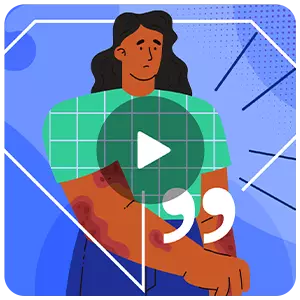
4 of 5 • Dr. Haque explains that scalp and nail psoriasis increase joint disease risk. Psoriasis can also lead to other comorbid conditions.
00:00:00:00 - 00:00:19:20
Dr. Haque
Psoriatic patients that have scalp psoriasis have a three times higher risk of having joint disease — and if you have nail psoriasis, about a five times higher risk of having joint disease as well.
Justina Ray
Does psoriasis affect our nerves?
Dr. Haque
Yeah, that’s a great question. Psoriasis can affect a whole bunch of different systems. Psoriasis can lead to something called metabolic syndrome.
00:00:19:21 - 00:00:41:19
Dr. Haque
And those patients have a higher risk of cholesterol, diabetes, high blood pressure, and heart conditions — and certainly diabetes can cause neuropathy and nerve pain. So if my psoriasis patients have comorbid conditions along with their psoriasis, such as diabetes, they could certainly have some neuropathy associated with that. Do you have any of those diseases, like comorbid conditions? Do you have diabetes, cholesterol, high blood pressure, anything like that?
00:00:41:19 - 00:00:58:03
Justina Ray
I’ve actually recently had my bouts with high blood pressure more than I had before, but nothing enough that I have to take medication for it, but it has increased with having the psoriasis.
Dr. Haque
That’s good to know, and it’s good to be able to look at your doctor and tell them that, hey, I might need another specialist on board.
00:00:58:04 - 00:01:15:09
Dr. Haque
I have to ask about other things also. Patients with psoriasis have a higher rate of depression than the average population does. Depression is something that I ask about everyone. Sometimes I just screen them for obesity and co-treat some of those things along with their psoriasis to get their psoriasis better too. Learn more and connect at MyPsoriasisTeam.com.
 | How Does Psoriasis Cause Hair Loss? |
 | Psoriasis and Joint Pain: What It Means for Daily Movement |
 | Pain and Psoriasis: 3 Causes To Know |
| 3 Facts To Know About Psoriasis Comorbidities |
 | What Happens if Psoriasis Is Left Untreated? |
Living with psoriasis doesn’t just affect your skin. The long-term inflammation that causes dry, itchy plaques can also raise your risk of other health conditions, called comorbidities, said board-certified dermatologist Adel Haque, M.D. These can include psoriatic arthritis, metabolic syndrome, and depression.
Below are a few important facts you should know about psoriasis and how it can affect your body over time.
Having scalp or nail psoriasis can raise your risk of developing psoriatic arthritis, Dr. Haque told Justina Ray, a teacher and mom of two who’s been living with psoriasis since 2022.
Psoriatic arthritis is caused by the same inflammation that leads to your psoriasis flare-ups. Psoriatic arthritis causes swollen, stiff, and painful joints. “Typically, about 30 percent of people with psoriasis go on to develop psoriatic arthritis. It can be really painful,” Dr. Haque said.
While it’s possible to have psoriatic arthritis without psoriasis, most people develop joint pain after their skin symptoms start. “I definitely also have psoriatic arthritis that I was diagnosed with after having the psoriasis of the skin,” Justina shared.
“Psoriasis can affect many different systems,” Dr. Haque said. People with psoriasis are at higher risk for metabolic syndrome, one of the most common comorbidities linked to psoriasis.
A person has metabolic syndrome if they have at least three of these five health conditions:
Metabolic syndrome can lead to heart disease, type 2 diabetes, and stroke.
Having metabolic syndrome could lead to symptoms you may not expect. Justina asked Dr. Haque, “Does psoriasis affect our nerves?” There may be a connection. “If my psoriasis patients have comorbid conditions along with their psoriasis, such as diabetes, they could certainly have some neuropathy (numbness or tingling) associated with that,” Dr. Haque explained.
“Depression is something that I ask everyone about,” Dr. Haque said. People with psoriasis are more likely to have depression and anxiety than people without psoriasis.
Factors like embarrassment and stigma can take a toll on your mental health and make it harder to do things you enjoy. One MyPsoriasisTeam member shared, “I love to swim but have been too embarrassed to go to the YMCA since my psoriasis is all over my legs. The same goes for pedicures. I am afraid of others thinking I am contagious!”
Another member wrote, “I didn’t realize how depressed psoriasis and psoriatic arthritis made me until I finally got relief from medications.”
There may also be a biological link between psoriasis and depression. Some of the same inflammation involved in psoriasis may also play a part in depression.
If you’re experiencing symptoms of depression, it’s important to tell your dermatologist or another healthcare provider.
Dr. Haque explained that he screens his patients for other health conditions. “Knowing that you have psoriasis … I know that I have to ask about other things,” he said. It helps to look at your overall health and ask whether you need other specialists as part of your care. For example, you may need to see a rheumatologist to help with psoriatic arthritis or a psychiatrist for depression.
“I think that’s really where you guide your treatment and you can really advocate for yourself over here,” Dr. Haque said.
On MyPsoriasisTeam, people share their experiences with psoriasis, get advice, and find support from others who understand.
Do you have health conditions in addition to psoriasis? Let others know in the comments below.
Get updates directly to your inbox.




 Continue with Facebook
Continue with Email
Continue with Facebook
Continue with Email
Continue with Facebook
Continue with Email
Continue with Facebook
Continue with Email
Become a member to get even more





 Join
Join


 Your Privacy Choices

This is a member-feature!
Sign up for free to view article comments.
Question is it psoriasis? you certainly cannot rely on conventional medicine to define,self knowledge the answere whatever ails AI a great help ,I used google gemini asking the question in various… read more
We'd love to hear from you! Please share your name and email to post and read comments.
You'll also get the latest articles directly to your inbox.