Connect with others who understand.

  •   Learn from expert-reviewed resources
  •   Real advice from people who’ve been there
  •   People who understand what you’re going through
Sign Up Log In
Powered By

Psoriasis Shampoo for Lice: Does It Kill Head Lice?

Medically reviewed by Nahla Maher, M.D.
Written by Jessica Wolpert
Updated on October 19, 2026

Key Takeaways

  • Dealing with scalp psoriasis is already challenging, and finding out you also have head lice can feel overwhelming, but understanding the differences between these two conditions is the first step to managing both.
  • Shampoos used to treat scalp psoriasis, including those with coal tar or salicylic acid, do not kill lice, so separate treatments are needed for each condition. Head lice and scalp psoriasis can look similar since both cause itching and flaking, but lice eggs stick firmly to hair shafts while psoriasis flakes brush away more easily.
  • If you have scalp psoriasis and think you may also have head lice, talking to your doctor can help you find a lice treatment that works without irritating your already sensitive scalp.
  • View all takeaways

If you have scalp psoriasis, a head lice infestation is the last thing you need. You’re already managing an itchy scalp, dandruff, sores, and other skin symptoms, and now you and your loved ones have to get rid of head lice, too.

Fortunately, medicated shampoos for lice can help. Shampoos formulated for psoriasis, however, will not treat head lice.

What Is a Head Lice Infestation?

Head lice are tiny insects that live on the scalp, where they feed on blood. Head lice can cause symptoms like itching, similar to scalp psoriasis. Head lice also lay tiny eggs, called nits, that attach to individual hair shafts.

🗳️ Have you tried psoriasis shampoo for head lice?
Yes
No
I’ve thought about it

Nits can look like the skin flakes caused by scalp psoriasis. However, unlike skin flakes, nits are firmly attached to hair and are harder to remove.

Medicated shampoos are used to treat both scalp psoriasis and head lice. However, the compounds used to kill head lice are usually very different from those used to treat scalp psoriasis.

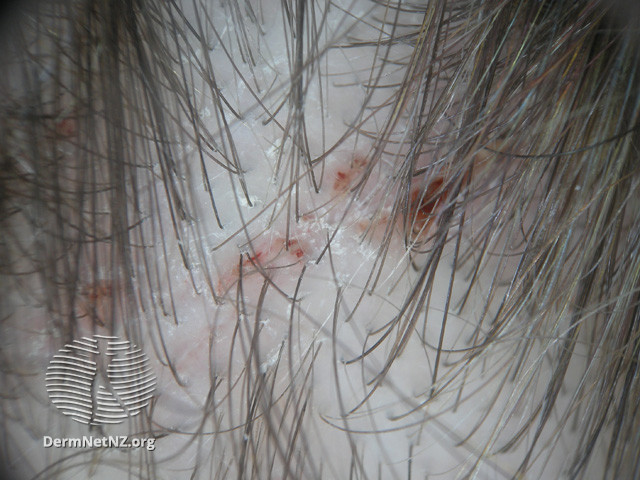
Scalp psoriasis with dry, flaking skin along the hairline that can resemble lice eggs.
Dandruff or skin flaking from scalp psoriasis, pictured above, can sometimes look like lice eggs (nits). Both scalp psoriasis and head lice can make your scalp itchy. (CC BY-NC-ND 4.0/DermNet)
Head lice and nits attached to hair shafts close to the scalp.
Lice feed on blood from the scalp, which can cause itching and skin irritation. (CC BY-NC-ND 4.0/DermNet)

Shampoos That Kill Head Lice

Head lice are usually treated with over-the-counter (OTC) or prescription medications. Some contain insecticides called pyrethrins or pyrethroids.

Pyrethrins are chemicals found in chrysanthemum flowers that are toxic to insects. Pyrethroids are synthetic chemicals similar to pyrethrins that also work to kill lice.

Over-the-Counter Treatments

A popular OTC lice shampoo is Nix. Traditional Nix Crème Rinse contains permethrin, but Nix Ultra products use different, pesticide-free ingredients.

Because products sold under the Nix name can contain different ingredients, check the label and follow the directions for the product you are using.

Head lice treatments that contain ivermectin lotion are also available OTC.

Sometimes, these treatments don’t eliminate head lice. One reason is that some lice have become resistant to certain medications.

Use a fine-toothed nit comb to remove lice and nits from the hair. Flea combs designed for cats and dogs may also work.

Prescription Treatments

Prescription treatments use different ingredients that may work when an over-the-counter treatment has not worked. The best treatment can depend on a person’s age, the product already tried, and whether the lice are resistant to certain medicines.

Prescription treatment options for lice include:

  • Malathion lotion
  • Spinosad (Natroba)
  • Benzyl alcohol lotion

If you try an OTC remedy for lice and it doesn’t work, talk to your doctor.

Shampoos That Treat Scalp Psoriasis

Shampoos for psoriasis don’t contain any of the lice-killing ingredients listed above. Most OTC psoriasis shampoos contain coal tar or salicylic acid and may include moisturizers.

Coal Tar Shampoos

Coal tar is a coal byproduct that has been used to treat psoriasis, including scalp psoriasis, for more than 100 years. It’s especially useful for treating itching associated with scalp psoriasis. Coal tar also slows skin cell growth, which can help prevent plaques.

Salicylic Acid Shampoos

Salicylic acid helps remove dead skin cells. It helps soften and remove thick psoriasis patches, making it easier for other treatments to reach the skin.

Prescription Shampoos

Prescription shampoos are also available to treat scalp psoriasis. Your doctor can help you find a treatment that works best for your scalp.

If you have psoriasis in other areas, like your face or ears, you may need additional treatments because shampoos may not work well in these areas.

Do Psoriasis Shampoos Kill Lice?

While shampoos with coal tar, salicylic acid, or topical steroids are useful medical treatments for psoriasis, none of them work directly to kill lice. You cannot wash your hair with your medicated shampoo for scalp psoriasis and expect head lice to go away.

If you need to treat both scalp psoriasis and head lice at the same time, you’ll need different treatments for each condition. It can be helpful to work with your doctor to manage both conditions safely and effectively.

Do Common Head Lice Shampoos Work for Scalp Psoriasis?

There are a few OTC lice shampoo options that are widely available. One, as mentioned above, is called Nix.

Head lice treatments aren’t designed to treat scalp psoriasis. Scalp psoriasis and dandruff have different causes, even though both can leave you with a flaky scalp. Because these conditions have distinct causes, they require a different treatment approach.

Coal Tar Shampoo for Lice Detection and Removal

Coal tar shampoo won’t kill lice, but it might help you find them. Even adult head lice can be hard to see on the scalp.

You can also look for nits (lice eggs), which look like tiny seeds attached to individual hairs near the scalp. However, the best way to confirm head lice is to find a live young or adult louse on the scalp or in the hair.

Skin flakes from scalp psoriasis can also make nits hard to spot. Washing your hair with coal tar shampoo before checking for lice might help remove flakes, making nits easier to see. Although some doctors may recommend this approach, there’s no research showing that coal tar shampoo makes lice easier to find.

Talk to Your Doctor

If you have scalp psoriasis and develop head lice, talk to your doctor about which lice treatment is best for you. Some treatments may irritate your already sensitive scalp. Your doctor can help you find a way to get rid of lice while keeping your psoriasis symptoms under control.

Share this article
A MyPsoriasisTeam Visitor

Tea tree oil helps psoriasis and lice.

All updates must be accompanied by text or a picture.

We'd love to hear from you! Please share your name and email to post and read comments.

You'll also get the latest articles directly to your inbox.

Subscriber Photo Subscriber Photo Subscriber Photo
249,638 members
This site is protected by reCAPTCHA and the Google Privacy Policy and Terms of Service.
Privacy Policy • Terms of Use
All updates must be accompanied by text or a picture.

Subscribe now to ask your question, get answers, and stay up to date on the latest articles.

Get updates directly to your inbox.

Subscriber Photo Subscriber Photo Subscriber Photo
249,638 members
This site is protected by reCAPTCHA and the Google Privacy Policy and Terms of Service.
Privacy Policy • Terms of Use

I recall a doctor I saw who was covering my regular docs patients. This doctor thought I Had body lice because I was itchy and red spots.
A MyPsoriasisTeam Member · 17 answers
View Answers
Continue with Facebook
Continue with Google
By joining, you accept our Terms of Use, and acknowledge our collection, sharing, and use of your data in accordance with our Health Data and Privacy policies.
Already a member? Log In

Thank you for subscribing!

Become a member to get even more

See answer